

 ×
×
The machinery manufacturing industry has long faced multiple challenges: complex product structures, a wide variety of materials, and small-batch, high-frequency production have become the norm. At the same time, traditional processing methods such as flame cutting, plasma cutting, and stamping generally suffer from issues such as insufficient precision, a high volume of secondary processing, and heavy reliance on molds.
These pain points directly impact production efficiency and delivery capabilities. For example, long mold development cycles slow down the introduction of new products; insufficient cutting precision increases the costs of subsequent grinding and finishing; and large heat-affected zones compromise workpiece performance.
The introduction of laser cutting technology provides a systematic solution to these problems. By utilizing high-energy-density laser beams for non-contact processing, it not only improves processing precision but also significantly reduces the need for subsequent processes, enabling the transformation of mechanical manufacturing toward greater flexibility and efficiency.
Structural components for construction machinery (such as excavators and loaders) are typically characterized by thick plates and complex shapes. While traditional flame cutting is suitable for thick plates, it offers low precision and produces rough cut edges, requiring extensive post-processing.
The advantages of laser cutting machines in this scenario are evident:
Higher positioning accuracy during cutting.
Smooth cut edges significantly reduce grinding processes.
Supports one-step forming of complex contours, eliminating the need for secondary drilling.
For medium-to-thick plate processing, high-power fiber laser equipment enables stable cutting, significantly improving overall efficiency compared to traditional methods.
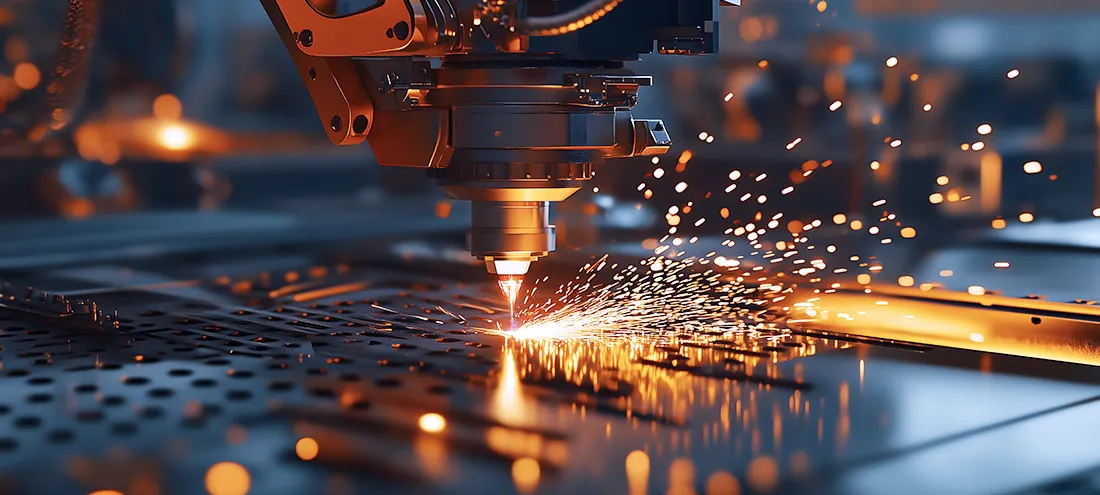
These parts (such as motor brackets, mounting plates, and connectors) are characterized by high volume, relatively simple structures, and cost sensitivity. The key lies not in “whether it can be cut,” but in “how to cut more efficiently and faster.” The core capability of laser cutting here is nesting: through automated software nesting and mixed-part layouts, material waste is reduced, and sheet utilization is improved.
Additionally, laser cutting enables the processing of micro-holes and complex geometries, helping to eliminate subsequent drilling and milling operations.
For companies with high steel consumption, this translates to direct cost savings. Furthermore, when integrated with automated loading and unloading systems, it enables a single operator to oversee multiple machines and supports continuous nighttime production, thereby boosting overall output capacity for batch orders.
Machine tool enclosures and protective covers for automated equipment are typical sheet metal components that demand high standards for appearance and dimensional consistency.
Traditional stamping relies on dies, which often take several weeks to produce and are costly, making them unsuitable for small-batch, high-variety production.
In contrast, laser cutting offers high flexibility:
No dies required, enabling rapid product model changeovers.
High hole positioning accuracy facilitates subsequent bending and assembly.
High-quality cut edges reduce post-processing work and allow direct progression to the painting process.
In practical applications, laser cutting can significantly shorten the prototyping cycle for new products, greatly improving R&D response times.
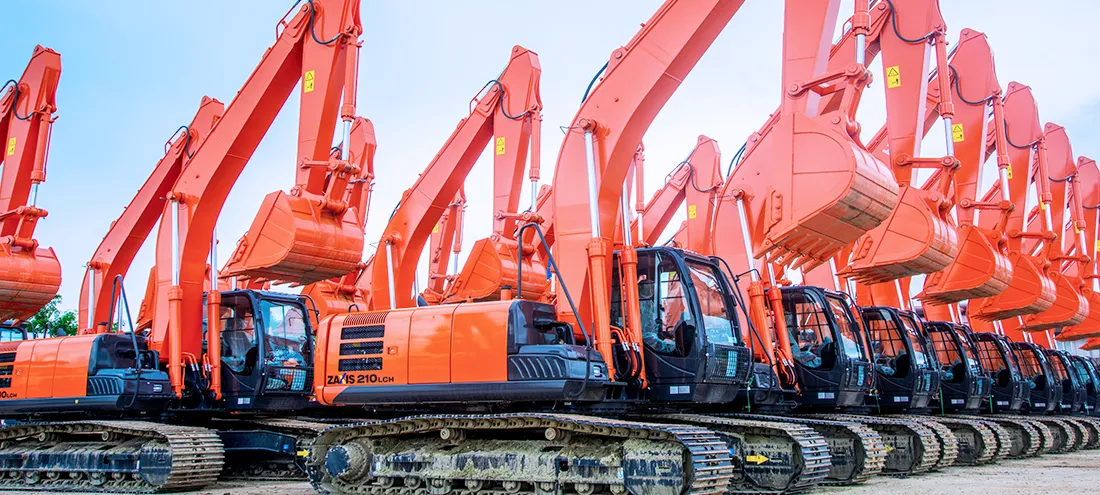
For industries such as steel structures and mining machinery, the processing of thick plates and large-sized workpieces is a critical step.
Traditional processes suffer from significant cutting deformation and poor precision, while high-power laser equipment is gradually replacing some traditional thick-plate processing scenarios:
More stable cutting speeds, particularly for complex contours.
Narrower heat-affected zones, reducing the need for post-cutting straightening.
Better cutting consistency makes it suitable for mass production.
For large workpieces (such as plates over 6 meters in length), when paired with large-format cutting beds, the process can minimize the need for splicing and repositioning, thereby improving overall processing efficiency.
Laser cutting machines operate at extremely high speeds, significantly shortening production cycles and improving production efficiency. However, the benefits of laser cutting extend beyond speed; more importantly, they enhance production flexibility. Laser cutting eliminates the need for mold development, offering a distinct advantage for orders involving multiple product varieties and small batches. Additionally, the clean cut produced by laser cutting reduces the need for processes such as grinding, drilling, and trimming.
In environments with high product variety, this means production schedules can be adjusted more easily. Many companies report a significant improvement in their ability to handle rush orders.
Although the initial investment in laser equipment is relatively high, the cost advantages are evident when viewed over the entire lifecycle.
Material Costs: Laser cutting’s shared-edge cutting, bridging, and continuous cutting capabilities, combined with specialized nesting software, allow for much tighter nesting of irregularly shaped parts compared to flame or plasma cutting, significantly improving material utilization.
Labor Costs: Basic operators can independently perform standard cutting tasks after just a few weeks of training. This reduces the production line’s reliance on a single “master craftsman,” making human resource allocation more flexible. Additionally, with automated support systems, when orders are stable and sheet metal specifications are uniform, automatic loading and unloading systems can be integrated. This enables one operator to oversee multiple machines and even achieve unattended nighttime production, thereby maximizing equipment utilization for batch orders.
In mechanical manufacturing, a common hidden cost is “rework.” Laser cutting offers the following improvements:
High-dimensional consistency, reducing assembly issues
Stable and consistent cut quality, enabling more controllable welding and reducing rework rates
High automation reduces human error and ensures high batch consistency
This directly contributes to enhancing the brand’s quality image.
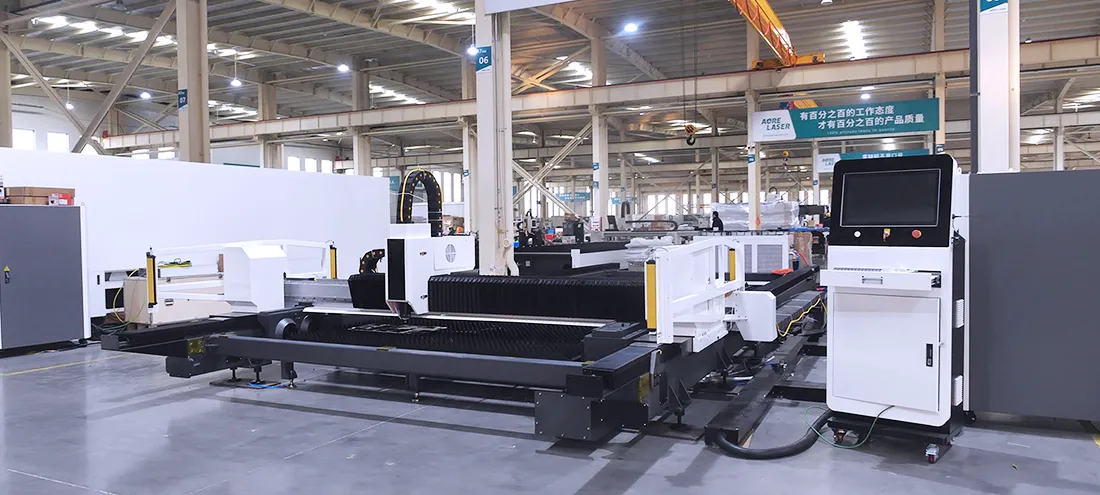
In mechanical manufacturing scenarios, the core issue with cutting equipment is often not whether “it is fast enough,” but whether it can maintain stable performance when handling medium-to-thick plates and large workpieces.
For example, in the processing of construction machinery or steel structural components, common scenarios include: large sheet sizes requiring frequent splicing or repositioning; high heat input during thick-plate cutting leading to gradual fluctuations in precision; and high consistency requirements during batch production. Under such operating conditions, the demands on equipment extend beyond mere power output to a comprehensive balance of working area capacity, structural stability, and performance in thick-plate cutting.
Take the GR series as an example; its design is geared toward typical heavy-duty manufacturing scenarios. Its large-format processing capability (supporting extra-large sheet sizes) reduces the need for panel splicing and repeated repositioning, making the machining of large structural components more straightforward. At the same time, for thick-plate cutting, the system has been optimized for deep penetration and stability, making it easier to maintain consistent cutting quality during continuous processing.
Additionally, in actual production, one aspect that is often overlooked is “expandability.” As order structures change, companies often need to adjust their production line configurations. The GR series’ modular design allows for greater flexibility during future upgrades or expansions, eliminating the need to replace the entire system.
Factories specializing in the production of structural components—primarily medium-to-thick plates—or manufacturing large workpieces and heavy-duty equipment components should prioritize this type of laser cutting machine. In these scenarios, whether the equipment possesses large-format processing capabilities and thick-plate stability is often more practical than mere cutting speed.
The mechanical manufacturing industry is evolving toward higher efficiency, precision, and flexibility. The limitations of traditional processing methods in terms of cost, efficiency, and quality are becoming increasingly apparent. In today’s increasingly competitive mechanical manufacturing landscape, the key to winning orders often lies in whether you can deliver three days earlier, reduce costs by two percentage points, or maintain quality at a higher level than your competitors.
By enhancing processing precision, reducing production steps, and optimizing workflows, laser cutting technology provides enterprises with quantifiable competitive advantages. For companies planning to boost production capacity and quality, the strategic adoption of laser cutting equipment is no longer an option—it is a critical step toward achieving sustainable development.