

 ×
×
As the automotive industry evolves toward light-weighting, electrification, and personalized customization, traditional manufacturing processes face new challenges. For instance, the widespread adoption of high-strength steel and aluminum alloys has exposed limitations in precision, flexible production, and material utilization within conventional stamping and machining techniques.
Against this backdrop, the application of CNC fiber laser cutters in automotive manufacturing is rapidly expanding. According to research by Global Growth Insights, nearly 45% of global automakers are deploying laser cutting machines for producing body panels and engine components. Approximately 32% of automotive manufacturers emphasize laser technology's critical role in reducing material waste, while over 28% highlight its contribution to achieving lightweight vehicle designs. With its high precision, minimal heat-affected zone, and high automation, laser cutting has become an essential technology for processing body structural components, battery systems, and complex parts.
From body panels to chassis components, automotive parts must meet exacting specifications. High-precision laser fiber cutters enable manufacturers to achieve tight tolerances. This ensures flawless assembly, clean edges, and consistent quality.
The variety of materials used in automotive design continues to expand, including stainless steel, high-strength alloys, aluminum, copper, and coated metals. Fiber laser cutting machines effortlessly process all these materials. They also support rapid design changes, allowing manufacturers to adapt to evolving market demands.
Laser cutting machines significantly reduce the time required per cut. This efficiency proves particularly advantageous for high-volume production, as time savings directly translate to cost reductions. It minimizes downtime and ensures effective resource utilization.
Laser cutting generates minimal waste during processing and eliminates the need for hazardous chemicals. This contributes to sustainable manufacturing practices.
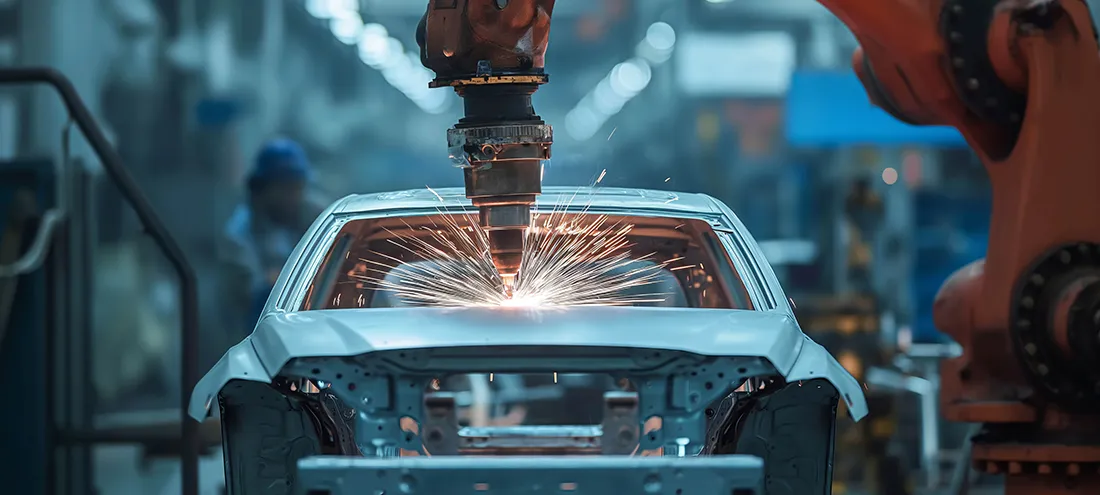
Within modern automotive manufacturing systems, fiber laser cutting machines leverage their high precision, minimal heat-affected zones, and flexible manufacturing capabilities to cover diverse processing scenarios—from body structural components to core parts for new energy vehicles. Below are the four most typical laser cutting applications in automotive manufacturing.
Body panels (such as doors, hoods, roof panels, and trunk lids) typically require complex curved contours and high assembly precision. In traditional manufacturing, these parts are primarily trimmed and punched using stamping dies. However, during frequent model updates or prototype stages, die development costs and lead times increase significantly.
Laser cutting technology enables high-precision contour cutting and hole punching without requiring molds. Through CNC program control, equipment can rapidly adapt to different vehicle models and design changes. For automakers, this translates to:
Significantly shorter new model development cycles
Lower manufacturing costs during small-batch prototyping
More consistent edge quality for body panels
Consequently, laser cutting has become a critical process in prototype development, trial production, and flexible manufacturing lines.
Driven by lightweight design principles and enhanced vehicle safety requirements, modern automobiles extensively utilize high-strength steel for critical structural components such as A-pillars, B-pillars, body longitudinal beams, and crash beams. These materials' high hardness and strength demand advanced processing techniques. According to Business Research Insights, nearly 73% of automotive chassis components employ laser-cut steel.
Compared to traditional mechanical or plasma cutting, fiber laser cutting offers distinct advantages when processing high-strength steel. The laser beam achieves narrow kerfs and consistent cut quality while maintaining a minimal heat-affected zone, thereby minimizing material property alterations.
For automotive manufacturers, this processing method enables:
Improved dimensional consistency of structural components
Reduced the need for subsequent machining and finishing operations
Ensured structural safety performance and assembly precision
Consequently, laser cutting has become a critical technological approach for processing automotive safety structural components.
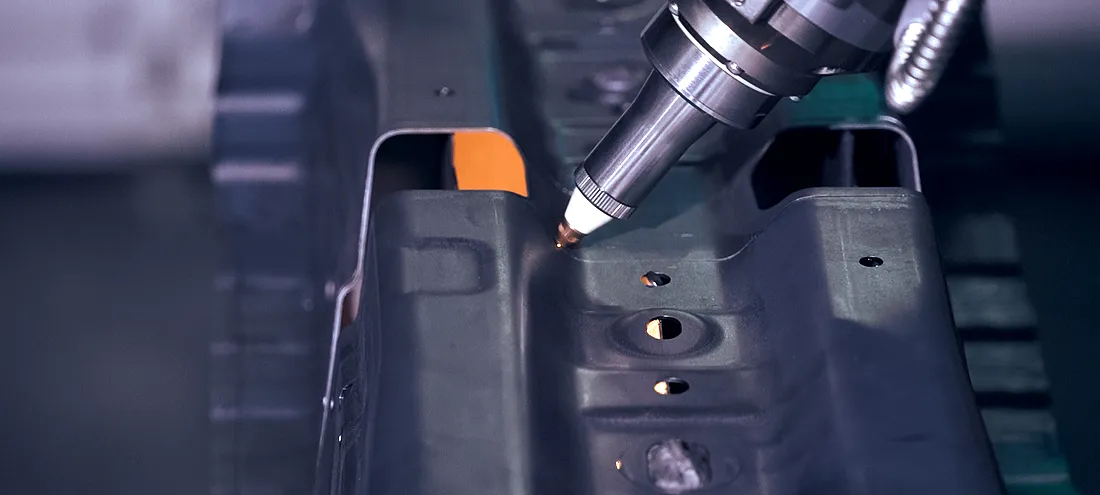
Electric vehicles require lightweight yet robust battery enclosures. Laser cutting technology delivers the precision needed for complex designs while preserving structural integrity. Typically manufactured from aluminum alloy or stainless steel, these enclosures demand high dimensional accuracy and sealing performance.
Laser cutting enables high-quality cutting and precise hole punching in aluminum alloys, providing an optimal foundation for subsequent welding and sealing processes. Additionally, its CNC machining approach facilitates adaptation to structural variations across different battery platforms.
In new energy vehicle production, laser cutting helps manufacturers:
Improve the dimensional accuracy of battery box components
Reduce material waste and enhance material utilization
Support modular battery platform design and multi-model production
Consequently, laser processing of new energy vehicle battery trays has become a critical step in electric vehicle manufacturing.
Beyond body-in-white structural parts, chassis components, and new energy vehicle battery housings, laser cutting technology is extensively applied in manufacturing various functional system components. Examples include exhaust systems, braking systems, thermal management systems, and certain powertrain components. These parts are typically fabricated from stainless steel, aluminum alloys, or heat-resistant steels, requiring high-precision hole punching, contour cutting, or complex structural machining.
For instance, in exhaust system production, laser cutting is frequently used to process exhaust pipe flanges, muffler housings, and heat shields. In braking systems, it enables precision contour cutting for brake brackets, mounting plates, and connecting structural components. Compared to traditional stamping or machining, laser cutting reduces processing steps while ensuring edge quality and dimensional accuracy, supporting flexible production of multiple part variants.
Therefore, within modern automotive parts supply chains, laser cutting has become a critical processing technology for enhancing production efficiency and ensuring component consistency.
In automotive manufacturing, numerous components feature intricate three-dimensional curved surfaces. Such parts typically require multi-angle cutting and complex contour machining, which traditional two-dimensional laser equipment struggles to accomplish efficiently. Addressing this need, AORE has introduced the CELL Series 3D Five-Axis Laser Cutting System, specifically designed for high-precision machining of complex three-dimensional structural components. Combining five-axis simultaneous motion technology with a high-speed 3D cutting head, this equipment enables efficient processing of multi-angle, complex curved surface parts.
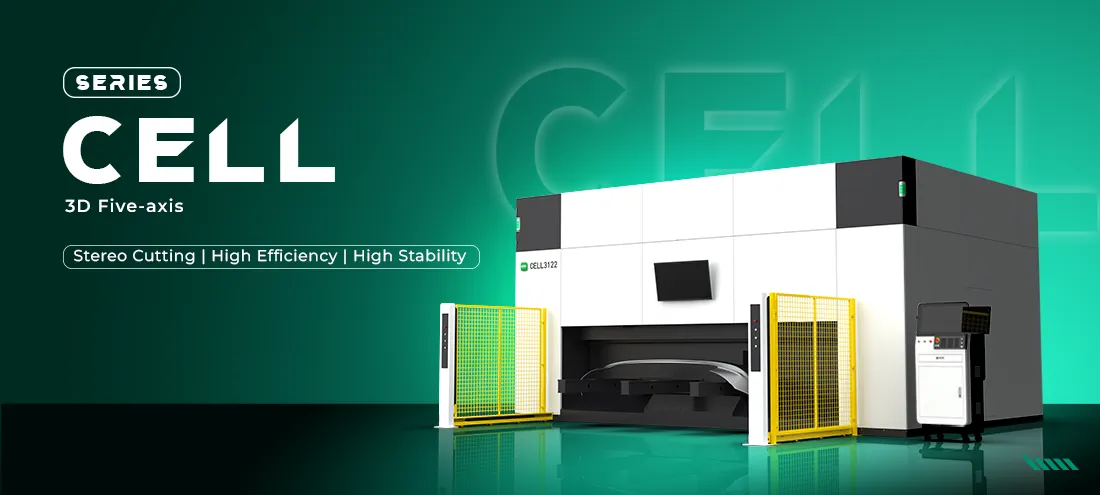
Core technological features of the CELL series include:
Five-Axis Synchronized 3D Cutting: Utilizing a five-axis simultaneous 3D cutting head with 360° rotation and ±135° swing angles, it achieves high-precision machining of complex surfaces and irregularly shaped structural components.
Dual-Station Rotary Table Structure: Equipped with a high-precision dual-station rotary workbench, it enables simultaneous cutting and loading/unloading operations. Station switching time is less than 3 seconds, significantly boosting production efficiency.
High Dynamic Performance and Stable Structure: The high-rigidity gantry design ensures stable precision during high-speed operation, with positioning accuracy reaching ±0.03 mm.
Safety and Environmental Design: The fully enclosed structure incorporates a fume extraction system, effectively enhancing workplace safety and operator comfort.
As the automotive industry advances smart manufacturing and lightweight design, laser cutting technology will play an increasingly vital role in body manufacturing, new energy vehicle structural component processing, and flexible production.
If you are evaluating laser cutting solutions for automotive manufacturing, AORE's engineering team can provide professional equipment selection recommendations based on your material type, production capacity requirements, and production line layout, along with complimentary sample testing support.